

Religious Education
National Curriculum Guidance
“Religion and beliefs inform our values and are reflected in what we say and how we behave. RE is an important subject in itself, developing an individual’s knowledge and understanding of the religions and beliefs which form part of contemporary society. Religious education provokes challenging questions about the ultimate meaning and purpose of life, beliefs about God, the self and the nature of reality, issues of right and wrong, and what it means to be human. It can develop pupils’ knowledge and understanding of Christianity, of other principal religions, other religious traditions and worldviews that offer answers to questions such as these. RE also contributes to pupils’ personal development and well-being and to community cohesion by promoting mutual respect and tolerance in a diverse society. RE can also make important contributions to other parts of the school curriculum such as citizenship, personal, social, health and economic education (PSHE education), the humanities, education for sustainable development and others. It offers opportunities for personal reflection and spiritual development, deepening the understanding of the significance of religion in the lives of others – individually, communally and cross-culturally.”

Our Intent
Our intent is that the teaching of RE will:

Create a safe environment where children flourish by asking questions about different religions, world views and the wider community.

Nurture and promote children’s spirituality, morality and cultural curiosity through collective worship and school assemblies.

Encourage children to make links between their own lives and those of others in their community and in the wider world, developing an understanding of other people’s culture and ways of life.

Provide learners with knowledge and understanding of Christianity and other principal religious traditions and beliefs represented in Great Britain.

Help children to become inquisitive by about their own beliefs, beliefs of others and the community they live in.
Our Implementation
The key areas of implementation we use are:
- Planning documents
- Progression map
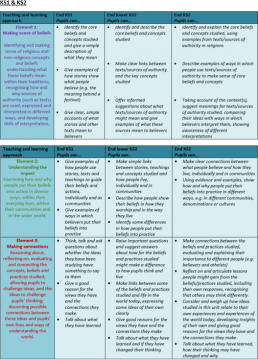
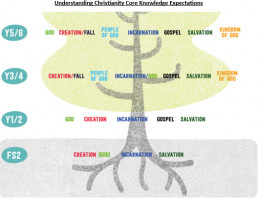
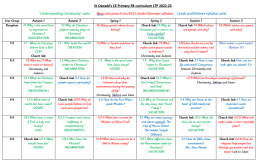
- Long Term Plan
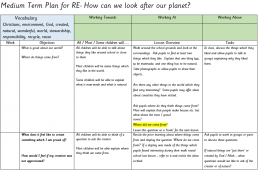
- Medium Term plans
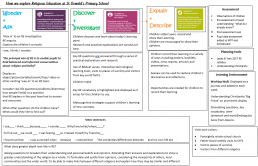
Flow Chart
The flow chart serves as an overview of how the subject is taught to ensure consistency in the following areas:
- Lesson structure
- Assessment
- Learning environment
- Resources
- Metacognitive scaffolding including knowledge organisers
- How we enhance the curriculum e.g. visits, celebrations, theme weeks
Impact
At St Oswald’s we see our children flourish through the wide-ranging curriculum to provide them with. We strive for the whole curriculum to be exciting, engaging and for all children to feel a sense of success.
In RE, we aim for the impact to be:
- Children consider learning about other faiths is important.
- Our children are tolerant of the beliefs of others, and are able to understand the value of visiting other places of worship.
- Children understand the place of Christianity in the school. They develop key ideas as they work through the Understanding Christianity, which consolidates their learning effectively.