

Modern Foreign Languages
National Curriculum Guidance
“Learning a foreign language is a liberation from insularity and provides an opening to other cultures. A high-quality languages education should foster pupils’ curiosity and deepen their understanding of the world. The teaching should enable pupils to express their ideas and thoughts in another language and to understand and respond to its speakers, both in speech and in writing. It should also provide opportunities for them to communicate for practical purposes, learn new ways of thinking and read great literature in the original language. Language teaching should provide the foundation for learning further languages, equipping pupils to study and work in other countries.”

Our Intent
At St Oswalds we strive to inspire our children develop into well rounded pupils with a variety of skills and interests that allow them to flourish into life-long learners. We aim to ensure all of our children develop a genuine love of languages, whether it be spoken or written. We expose the children to a diverse range of subjects, songs and texts, so that the foundations are laid to continue learning languages in KS3 and beyond.

Children are challenged and encouraged to take risks and view mistakes as a positive part of the learning a new language and to continue to persevere to practise and learn.

At our school, teachers encourage children to express themselves with growing confidence, fluency, and spontaneity. Pupils use creative approaches and kindness that facilitates their ability to communicate their thoughts, engage in discussions, and pose questions, while continually improving the accuracy of their pronunciation and intonation.

To engage students in learning a foreign language that enhances their curiosity, broadens their understanding of the world, and encourages an appreciation for diverse cultures.

Ensure pupils are immersed and engaged in languages and allowing them to express excellence in the subject by focussing on expressing facts, and emotions through both spoken and written communication, concentrating on familiar and everyday topics. Meanwhile still utilising their understanding of phonology, grammatical structures, and vocabulary.

Pupils should recognise the diversity of languages present in our community and appreciate the significance of languages in various cultures, both locally and globally. Embrace the opportunity and have the courage to utilise your prior knowledge and skills to impart vocabulary, songs, and insights to others.
Our Implementation
The key areas of implementation we use are:
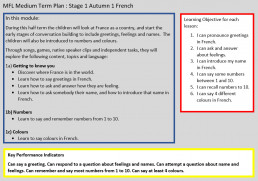
- Planning documents
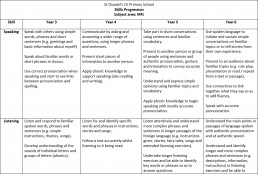
- Progression map
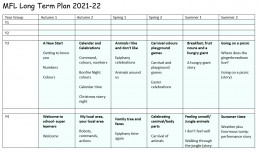
- Long Term Plan
Flow Chart
The flow chart serves as an overview of how the subject is taught to ensure consistency in the following areas:
- Lesson structure
- Assessment
- Learning environment
- Resources
- Metacognitive scaffolding including knowledge organisers
- How we enhance the curriculum e.g. visits, celebrations, theme weeks
Impact
At St Oswald’s we see our children flourish through the wide-ranging curriculum to provide them with. We strive for the whole curriculum to be exciting, engaging and for all children to feel a sense of success.
In Modern Foreign Languages, we aim for the impact to be:
- Children understand the value of learning a new language.
- Children are aware of the links between languages across the world.
- Children enjoy learning being introduced to a new language, acquiring basic skills and vocabulary.